Welcome back to PDC!
Today we’re covering the 2026 TOC, providing an in-depth overview on the results and some notable facts on the tournament as a whole. Enjoy!
Breaking Down a Contested Bracket
Montgomery Bell Academy’s Russell Howard and Jimmy Li (MBA HL) take the title of the 54th Annual Tournament of Champions with a 3-0 victory over Glenbrook North’s Ethan Camp and Joe Rozenblat (GBN CR).
Both teams were on their game this year. MBA HL was moving throughout the back half of the year, winning the Southern Bell Forum, Barkley Forum, and Cal Invitational. At the TOC, they only dropped one elimination ballot. For Glenbrook North, it was a heartbreaking finish after a historic year, with the team taking home Michigan and The Glenbrooks.
The semifinal bracket set up an intriguing MBA closeout that never materialized. GBN CR knocked out MBA’s Oliver Johnston and Res Seibels (MBA JS) while MBA HL got past a tough Westwood Ethan Andrew and Nikhil Gupta (Westwood AG).
The quarterfinals included a third MBA team composed of Fox Travis and Enno Brandes (MBA BT), who were narrowly edged out on a 2-1 decision by Westwood. Newark Science’s Risiqat Adeniji and Mofoluwa Olagadeyo (Newark Science AO) became TOC quarterfinalists after a remarkable 6-1 preliminary record. Blue Valley Southwest’s Rohan Chalamalasetti and Brayden Presley were also quarterfinalists, going 6-1 with two top ten speaker awards. Little Rock Central’s Jack Liu and Shangyu Wu (LRC LW), the number one seed going 7-0, were defeated by the finalists from GBN in a close 2-1 decision in the quarterfinals as well.
Now, let’s analyze the tournament a little bit closer.
We Need to Stop Overcorrecting Neg.
The negative win rate in the elimination rounds was 77%. If we narrow it a bit to quarterfinals and further, we get a 100% negative win rate (!).
Thankfully, the pre-elimination rounds were more balanced, with a 54% win rate, still favoring the negative.
Is it 2N skill, topic bias, or overcorrection? I guess we’ll never know. It should be noted that flips overwhelmingly resulted in the winner choosing the negative side.
New Affirmatives Broken at the TOC!
Based on a quick analysis of ColdConceded email chains, at least 26 new affs were broken at the TOC (the true number is slightly higher from miss counts and non-CC chains). Quite a number. The majority were broken in the pre-elimination rounds.
The categories of affirmatives were mostly not new: the majority were military, some energy affs, and a few miscellaneous infrastructure affs.
The most bolt-from-the-blue aff has to be Sonoma’s ‘build a courthouse’ aff. Very innovative. Only got the spotlight for one round. Glenbrook North’s ‘build a bank’ aff was similar vibes. Props to the 2A innovation.
The Biggest Shocks Of The Tournament
The great state of Kansas’ Blue Valley North Mitchell Coleman and Kyle Toal (BVN CT) entered the Lexington unranked but left as octafinalists, going 6-1 in prelims, granting them the 7th seed. Interlake’s Jerry Song and Aaron Wang (Interlake SW) also made an impressive run to the octafinals. They had a few breakouts throughout their season, including at the Cal Invitational, but made their mark at the TOC.
On the flip side, LASA’s Ankit Bhasi and Josey Conley (LASA BC), one of the preeminent teams throughout the season, notably winning the Pace Round Robin and Cal Round Robin, left with an unfortunate 4-3 record. Additionally, Glenbrook South’s Neel Patel and Liam Samet (GBS PS), who made a stellar performance throughout the year, despite being a new partnership starting the second semester, could not reach the elimination rounds, but made an incredible run. Greenhill’s Rory Liu and Dhiya Hemchand gained four ballots and took home a Top 20 speaker award, capping off an impressive season.
Shout out to Whitney Young’s Darwin Bass and Samar Mohan (Whitney Young MB) for making it to the octafinals and getting two top ten speaker awards despite fading the entire second semester.
Splitting Panels?
Of the twenty-two elimination rounds, only thirteen of them resulted in a 3-0 decision. There was a 41% split rate. For reference, the NDT had a split rate of 59% (16/27 rounds) which is a bit higher. But, the NDT does have five judges per panel, contributing to that higher rate.
Best State?
The longstanding question in debate has always been “Which state has the most debate success?” With the end of the 2026 TOC and the placement results that come from it, we can start mapping out the country.
Based on placement complements (i.e. first place gets 16 points and sixteenth place gets 1 point), the standings per state are here:
1. Tennessee: 38
2. Illinois: 25
3. Kansas: 19
4. Texas: 14
5. Arkansas: 12
6. New Jersey: 10
7. New York: 6
8. Taipei: 5
9. Washington: 4
10. Florida: 3

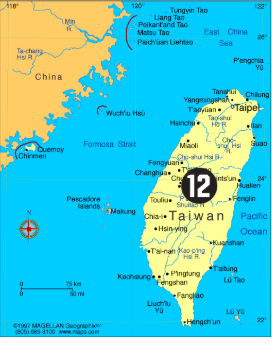
Of course, these results are just for fun and based on one tournament. But we hope it sparks a little competition and we’ll keep updating it!
Looking Forward
As we wrap up the final tournaments of the year including NCFL and NSDA we’ll be sure to keep updating you. Our next post will be the Arctic Topic Round-Up with some analysis on the year plus some fun awards (similar to DebateDecoded)!
Be sure to fill out this form for awards you want to see and some future posts!
https://forms.gle/pDDFXHs16SR5ACsV6
Best,
PDC Team